Explaining the bystander approach
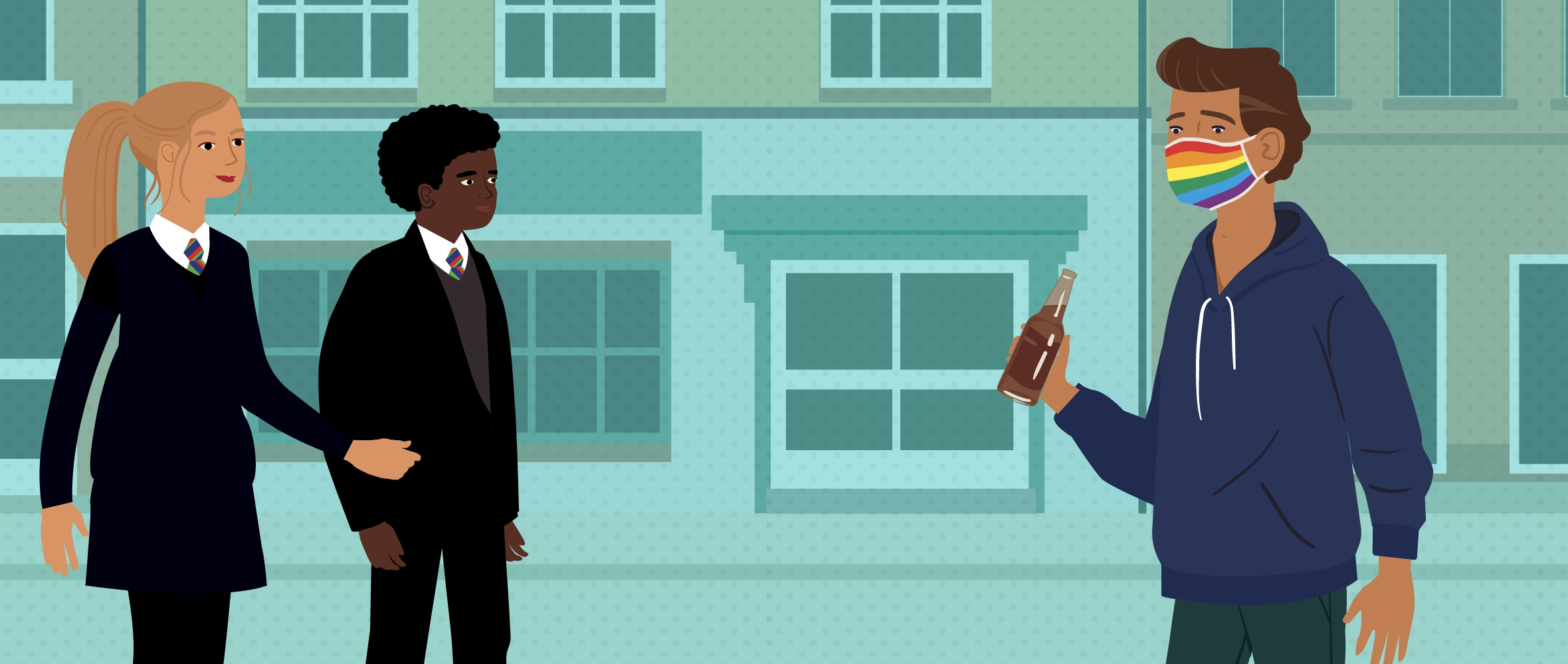
Throughout the MVP programme, a bystander is described as a friend, family member or classmate – in other words, it is anyone.
Being a bystander means that we are all in a position to hear, see or know about abuse/violence happening.
The bystander approach aims to create a positive culture in schools and communities, where abuse and violence are recognised and viewed as unacceptable. By questioning social norms and pluralistic ignorance, and reassuring young people that the majority of their peers hold similar healthy views on abuse and violence – (that it should not happen), this helps to realign beliefs and create safe, healthy and inclusive learning environments where all of our young people can flourish, lead and attain.
By using this approach, MVP can engage all young people in discussions about abuse and violence, not as a potential perpetrator or victim, but as an empowered bystander with the skills and understanding to challenge negative behaviour and support victims.
We know that becoming an active bystander is not easy. We may feel embarrassed, fearful, ill-equipped – these feelings are common.
However, by recognising the role we have to play, and by using the 5 Ds – we can recognise that there are other ways we can help, intervene, prevent and stop abuse/violence happening.
Bystander intervention films created by young people, for young people can be found here.
There are four stages of becoming an active bystander approach
Notice
Notice something is happening, whether that be seeing, hearing or knowing about the incident.
Recognise
Recognise the there is something wrong – what are the red flags?
Decide
Decide that you have a personal responsibility to do something.
Even if you know someone else is doing something about it – you can still do something to!
Have skills
Using the 5 Ds listed below, identify which option is the safest to use.
The 5 Ds
Direct Action
You can directly intervene in a situation if you feel confident to do so. But only do this if it safe, and you are not putting yourself at risk.
Distract
You can interrupt, change the conversation or think of a way to get the victim out of the situation.
Delegate
Is there someone who can help you? Delegation can ensure responsibility is shared with others.
A friend who can provide advice, or a trusted adult or someone in authority who can step in.Delay
You can slow the situation down using distraction techniques to de-escalate the emotions.
Or delay your approach until after the situation has happened by checking in with victim.Document
You can make a note or record what’s happened, ensure these are used to help the victim if they wish to report the incident.
DO NOT share with friends or on social media.